This guide describes the general phases of a kitchen remodel. It does not give durations, because any number would be a guess for your home. Ask every remodeler for lead times and a schedule in writing.
Phase 1: Planning and Scope
Everything starts with deciding what you actually want changed. Are you replacing cabinets and counters only, or changing the layout? Are appliances moving? Do you want a pantry, an island, a coffee bar? The clearer the scope, the clearer the written proposal. Our kitchen remodel planning checklist covers what to gather before you request estimates.
Phase 2: Design and Selections
This is where you choose cabinet style and finish, countertop material, flooring, backsplash, sink, faucet, lighting and hardware. Selections drive the rest of the schedule, so decisions made late are a common source of delay. Make sure every selection is written down, with the product name or number, so the order matches what you picked. Read more about how cabinet and countertop choices affect the look, schedule and budget.
Phase 3: Written Proposal and Agreement
Before any work begins, you should have a written scope that lists what is included, what is excluded, allowances for items you have not yet chosen, and how changes will be handled. See what a good written proposal includes. Ask whether a start date and an expected completion window are stated in writing, and what could move them.
Phase 4: Permits and Approvals (If Required)
Some kitchen work, such as changes to plumbing, electrical, gas or walls, may require a permit, and condos and HOA communities often have their own approval steps, work-hour rules and elevator reservations. Requirements vary by city, county and association. Check with your local building department and your HOA or condo association, and ask any remodeler to explain in writing who is responsible for each approval. Approval times can affect your start date.
Phase 5: Ordering and Lead Times
Cabinets, countertops, appliances, windows and specialty tile are often ordered after the agreement is signed, and they may not arrive right away. Lead times differ by product and supplier and can change. Ask for the expected lead time on each major item in writing, and ask what happens to the schedule if something is back-ordered. Ordering early and confirming measurements are two of the most useful ways to reduce surprises.
Phase 6: Preparation and Demolition
Before demolition, the work area is protected and your belongings are cleared out of the kitchen. Demolition removes old cabinets, counters, flooring or other items in the scope. This phase is loud, dusty and sometimes reveals conditions behind the walls that nobody could see in advance. Ask how hidden conditions and any resulting changes will be priced and approved before the work continues. Our guide on living at home during a kitchen remodel has practical ideas for a temporary kitchen.
Phase 7: Rough-In Work
If plumbing, electrical or gas lines are being moved or added, that work happens while walls and floors are open. Where permits and inspections apply, they usually occur at this stage. Confirm with your building department which inspections apply and who schedules them.
Phase 8: Cabinet Installation
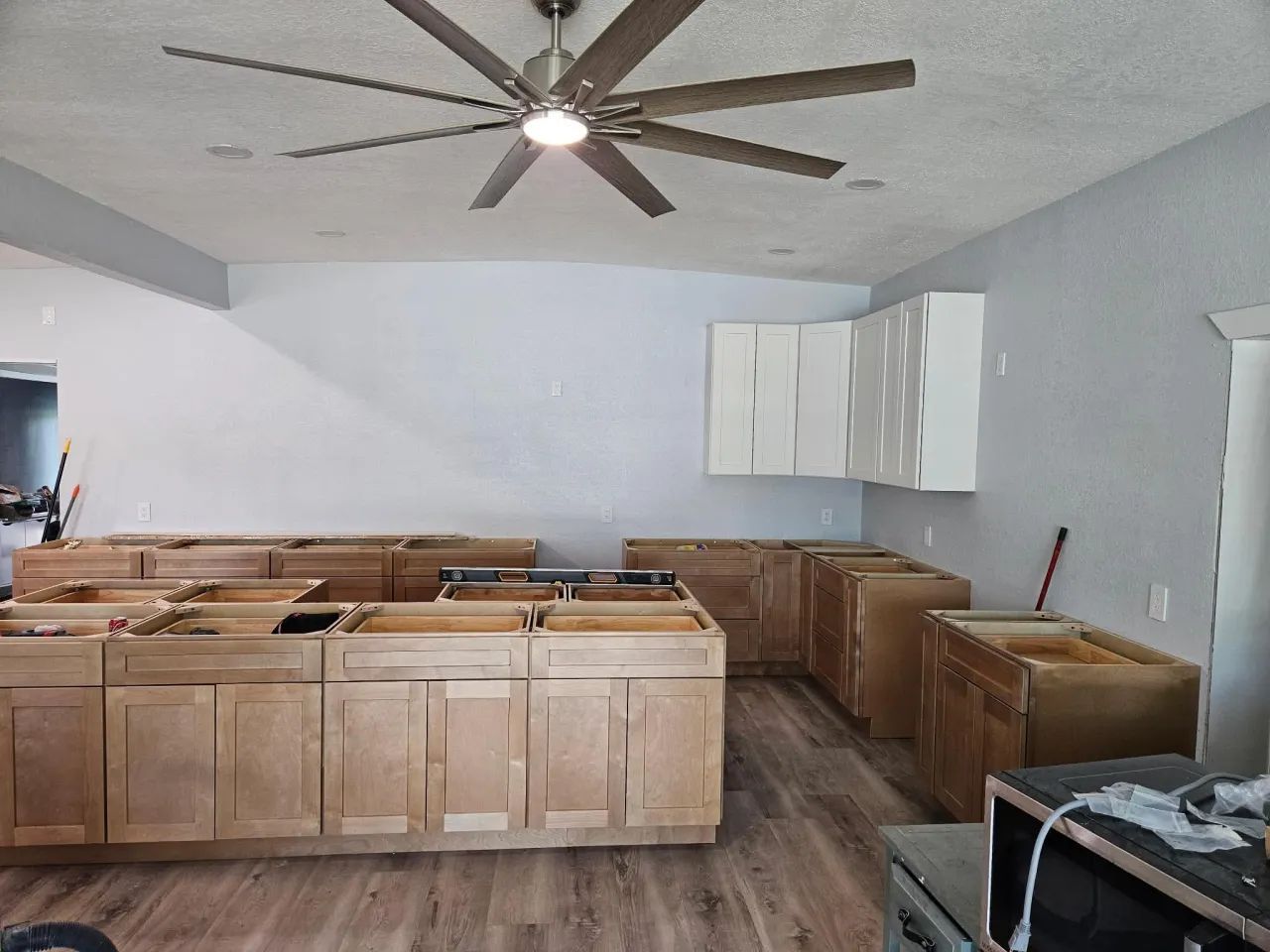
Once the space is ready and the cabinets have arrived, installation begins. Base cabinets and islands are set and leveled, and wall cabinets are hung. The photo above shows a kitchen at this stage: the cabinet boxes are in place, but there are no countertops, backsplash or final finishes yet. It can look unfinished for a while, which is normal.
Phase 9: Countertops, Backsplash and Plumbing Fixtures
Many countertops are measured after the cabinets are installed, then fabricated and installed afterward. This gap is a common point where the schedule stretches, so ask how it is handled. After counters, backsplash tile, sink and faucet, and appliances go in.
Phase 10: Final Details and Walkthrough
Paint touch-ups, hardware, trim, lighting and final cleaning wrap up the project. Then comes a walkthrough where you check the work against the written scope and make a punch list of any items to fix. Ask in advance how the punch list and final payment will be handled.
Where Delays Usually Come From
- Selections made late or changed after ordering
- Back-ordered products
- Hidden conditions found after demolition
- Approval or inspection scheduling
- Scope changes in the middle of the project
Questions to Ask Any Remodeler
- What are the lead times for each major item, in writing?
- What is the expected start and completion window, and what could change it?
- Who handles approvals and inspections, and what do I need to do?
- How are changes priced and approved?
- Who is my point of contact day to day?
Ready to talk through your own project? Contact UG Renovations for an estimate, or see recent projects.